Showing posts with label balance of payments. Show all posts

Thursday, June 28, 2018

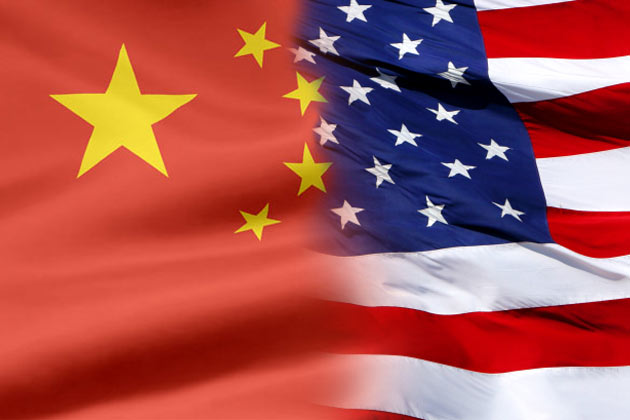
China vs. U.S.


As I have previously mentioned (see: here and here), China and the United States are locked in an economic battle that has enormous consequences for world leadership, national security and economic pride. This face-off may be the ultimate test of  the American way. Will China achieve its goal to become the largest world economy by 2025? Or will they overextend key elements of their economy and falter in this race?

Clearly, with three times the population of America, with authortative central planning,  with a very large balance of payments and resultant sovereign wealth, with am industrious and intelligent workforce, with the ability to manipulate its currency ... and with a willingness to cut ethical corners; China mas some clear natural advantages. But is this enough?

But the U.S. also has some advantages -- with a superior (but deteriorating) higher education system, with more natural resources (particularly energy), with a stronger military, with a natural geographic advantage (spanning two oceans), with superior  technical innovation, with a governance based on checks and balances ... and with a larger set of historic allies (such as they are). But is THIS enough?

It seems that the two critical advantages that the U.S. has are the geographic and governance edges ... the former, China cannot change ... and the latter, it can change but is unlikely too. Why is central planned capitalism inferior to America's when many pundits (Tom Freedman, Paul Krugman) advocate just the opposite?

Yes, strong centralized capitalistic planning (as in China) can do better in some situations ... in trade wars for instance ... but, without the push and pull of free-market capitalism (as in the U.S.) mistakes can be made that are bigger and not self-correcting. This us likely the most critical difference between China and America ... and the one most likely to spell the winning margin in this battle of the Titans.

It also would be nice to have Russia on our side in this joust!

Saturday, May 19, 2018

A Few Observations


- Obama's spooks, Brennam, Comey and Clapper, were so focused on undermining Trump's bid for the White House; I wonder how many real intelligence jobs went undone or underdone?

- Back in the day when salt was as valuable as gold, a bag of potato chips might have cost as much as $100

- If the Clinton Foundation and Global Initiative were not money laundering operations, how come they have gone quiescent after Hillary is no longer a shoe-in for the presidency.

- How does the DOJ's Rod Rosenstein still have a job since it has been revealed that he illegally back-dated by weeks the authorization to break down Manafort's  door at 3 AM to search his home and arrest him?

- Why is Turkey still in MATO?

- When the Federal Reserve Bank's primary missions of full employment and a 2% inflation rate are met, as they are now, it would seem that the Fed could swing to helping our balance of payments strategies and lowering the cost of financing our national debt.

Wednesday, April 04, 2018

Trade Wari?


China has recently threatened $50 billion in tariff retaliation against the equivalent planned tariffs by the United States against China ... thus raising the spectre of a trade war. Is this a serious threat? Let's first look at the numbers: in 2017 China exported $560 billion of goods and services to the U!S. and we, $185 billion to it ... for a total U.S. trade deficit of $375 billion, see: NY Times Article. Although China is the second largest economy in the world, it exports to the U.S. represent a far bigger proportion of its GNP than our exports to them.

Now there is in game theory the notion of the optimal gaming strategy being minamax ... minimize your maximum loss. Therefore, if China and the U.S. get into an all-out trade war, reducing both these trade numbers to zero, China would be far more damaged ... probably to the point of massive social disruption. Using game theory, which I am sure China understands, the United States does have the strategic high ground in this pissing contest.

OK, but China does own well over a trillion dollars in American government debt. Can't they use this as a cuddle against Trump's tariffs? But Trump knows this game quite well from his previous banking relations  -- when you owe the banks a huge amount of money, they don't own you ... you own the banks. If China were to start selling this U.S. debt, it would drive down the prices on that which it still holds ... and also, in the process, make the Federal Reserve Bank's job of paring its balance sheet easier.

Trump has stated that his objective is to reduce our trade deficit with China by $100 billion over the next year. Obviously, an all-out trade war would accomplish this ... but also would serious talks with China wherein Trump uses our above negotiating leverages effectively ... much more likely the latter than the former.

Monday, March 12, 2018

Leveling the Playing Field


Many American free-traders are wearing blinders. The rest of the world has erected punitive tariffs against our products -- 25% on cars going into China and 100% on motorcycles going into Japan, etc. -- yet when Trump places selective tariffs on steel and aluminum, our Chamber of Commerce predicts the end of the world. We are still living with the fiction that trade barriers caused the Great Depression ... not the real culprit, very tight monetary policy.

Trump's (and Wilbur Ross's)  instincts are right ... either the rest of the world should level the playing field to American products or we will reciprocate in kind. The multitude of countries who have been wallowing in balance of payments surpluses with the U.S. should think twice before issuing hollow tariff threats. They have much more to lose than to gain.

Trump is actually wrong on one count -- this country has a long way to go before we are truly great again. Too many of our industries are on life support (or dead) due to not just unfair tariffs but also numerous subsidies by foreign countries on their industries ... just those with value added taxes (VATs) have a huge competitive advantage which is not being negated by Trump's push-back ... and they should. No wonder we are running close to trillion dollar trade deficits with the rest of the world. We are fighting these trade wars with both hands tied behind our backs ... tariffs and VATs. And I have read that there is a high positive correlation between negative trade balances and government spending deficits.

Trump is playing our economic offense correctly. But he needs to keep up the pressure before we can feel that that we have bulldozed the playing field level.

Saturday, February 11, 2017

VAT


Unraveling trade deficits might be very simple. Let me try to explain.

President Trump complains that the United States is stupid and being hosed in its trading with most other nations. One focus of this gripe centers around the innocuous value added tax (VAT) which, in most cases is a cumulative tax paid to the nation host during the various manufacturing sequences  ... but which is then removed when such products are exported. This very much is effectively a national subsidy for exporters. And most countries with whom we trade have VATs therefore put us at a trading disadvantage. Here is a compendium of countries with VATs: US Council for International Business List.

And in most cases these same countries impose a VAT on goods that are being imported into their countries ... see: VAT on Imports. This is the equivalent of a tariff or duty. So VAT, which seems so innocuous to the layman, is an insidious way of beefing up exports and discouraging imports. No wonder the United States has been running huge balance of payments deficits and Trump is down on our trade negotiators.

Rather than adding Trump's "border tax," perhaps we should also jump into the VAT to fix things?

Saturday, September 10, 2016

Inflation


Central banks around the world are pulling out all stops to try to counter what has been a persistent global deflationary trend. ... at least in developed economies. They have tried Quantitative Easings 1, 2, 3, etc. ... purchasing vast quantities of government debt and now even private debt to increase the money supply ... clearly to the point of diminishing returns ... since all this cash is not causing the sleeping giant of inflation to awaken. Of course, with all this debt on their balance sheets, they have also forced interest rates down ... even into negative territory ... so that all this debt doesn't crush their income statements and, more importantly, in an attempt to disincent private savers ... since saving negates spending which, in turn, is necessary for inflation.

What have been the consequences of all these central bank actions?

- I would argue that these central-banks' easy monetary accommodations have given the fiscal side of governments the license to spend beyond reason .. feeding the yaws of these ever increasing central banks' debt issuances. This will surely have longer-term consequences.

- Raising interest rates, particularly in the United States, has been like a trip to the dentist ... something put off until absolutely necessary. Don't forget that most 2015 projections had our Federal Reserve Bank raising rates four times in 2016. How many times so far? Zero! And that tooth is throbbing more and more. And I predict it won't happen before the election either ... since this might damage Hellary's chances. In December, it is more likely, especially if Trump is elected.

- Of course raising interest rates attracts capital from around the world which strengthens the dollar which then hurts exports and helps those countries importing here. Thus, the U.S. balance of payments gets even worse than it devastatingly is. This might be OK with Clinton but wouldn't sit well with Trump. He might lean on the Fed to weaken the dollar (not necessarily with interest rates) to help bring manufacturing back to America. The Fed might resist which would open another can of worms -- more federal government control over the Fed.

- The jury is out about what happens with government spending and deficits after the election. Both candidates have promised increased infrastructure spending and, Trump, a beefing up of our military ... while Hellary will open the spigots on social transfer payments. Taxes will likely go up under either candidate but, I would hope, under Trump, we might get real tax reform which might then spur our economy enough to reduce deficits. In Trump's case the Fed might be able to move more into the background except Trump might push to lengthen the term of our government debt. Clinton would still require a very accommodating central bank.

This is all very complicated with many fiscal and monetary cross currents. I wish I had the confidence that any of the world's central banks knew exactly what they were doing ... including our own. However, I think that one consequence is very likely to occur. Once all these monetary gurus have coaxed the inflation genie out of the bottle, that it will not stop at their targeted 2%. All this money in hiding around the world will then start sloshing around and may well sink a few of the more injudicious ships of state.

Saturday, July 09, 2016

Obummer's Legacy


Obummer may not be the worst president in American history, but he still has six more months to sew up the title. He promised us hope and change ... and he certainly changed most things for the worse ... to the point where many of us are willing to take a flyer on a loud-mouth self promoter who just might repair enough things to save our nation's bacon. To reprise Obummer's last 7 1/2 years, here is the legacy he has left us with:

- More than a doubling of our national debt to an unsustainable level

- Race relations at an all-time low

- Corruption tainting almost every cabinet department

- Growing income inequality squeezing the middle class

- Urban crime rates back on the rise

- Economic and wage growth in the toilet

- Negative balance of payment at an all-time high

- Number of people dropping out of the workforce at an all-time high

- Swarms of illegal immigrants from Latin America countries

- An open door policy for unvetted Muslim immigrants

- A doubling of families receiving food stamps

- Zero tax reform

- Zero entitlement reform

- Huge increase in burdensome government regulations

- A gutting of our military

- Disastrous remaking of our health-care system

- The Middle East in smoking ruins

- Much more belligerent Russia, China, North Korea and Iran

- An alienated and abandoned Israel

- Deteriorating national infrastructure

- Serious loss of our international hegemony


And Hellery Clinton has promised to continue us down Obummer's primrose path!
!

Sunday, July 03, 2016

Relativity


No, this blog entry has nothing to do with Einstein. It is about comparing our presidential politicians on the important issues. For instance, Donald Trump wants to build a wall on the Mexican border to stop the hoards of illegals from entering the United States ... whereas Hellery Clinton has been advocating for "open borders," with little or no restriction on who, how, when or where immigrants enter the United States. And since a huge proportion of recent immigrants end up receiving public assistance, to me, this is a recipe for "The Decline and Fall of the American Empire." Yes, and a disproportionate percentage of these illegals end up committing other crimes ... please peruse: The Center for Immigration Studies ... another good reason for enforcing current immigration laws.

Like most Americans, both Hellery and The Donald are "free traders", but Trump believes that the devil is in the details. Pacts like TPP and NAFTA give up too much U.S. sovereignty and economic leverage according to Trump and need to be renegotiated. Whereas Hellery thinks that these trade agreements are just fine ... even though the evidence shows that NAFTA has decimated U.S. manufacturing. Yes, the lefties say that automation is the chief reason for the decline in what was once U.S. manufacturing employment levels. If that be the case, why then relocate factories off shore since the labor content is so low anyway? This does nothing but cause our balance of payments to sink further into the red.

The Democrats and Hellery are hell bent, every time there is a terrorist attack at home, in blaming the gun if there is one involved. The terrorist's culpability is somehow secondary. If the weapon of choice is not a gun ... say a pressure cooker or a box cutter ... then lefties bend over backwards to find some other reason for this terror other than the Religion of Peace. Donald Trump however brags that he has a license to carry a firearm and often does. He promises that he will be a staunch defender of the Second Amendment ... whereas Hellery will appoint new justices of the Supreme Court who will surely gut this precious American civil right. Trump also recognizes that Islam is the common denominator in most of this terror and wants stricter vetting of immigrants from Muslim nations where such terror is rampart. Hellery wants to import tens of thousands more of these potential "Allahu Akbar" miscreants.

Dear reader, this is enough relativity for today. Trust me, I will entertain you with more in the not too distant future.

Friday, October 07, 2011

Yuan for the Money, Two for the Show ...


The conventional thinking is that free trade is good and protectionism, through higher imposed tariffs, is bad.  It was the Smoot-Hawley protectionist-trade bill that is thought to have contributed the Great Depression in 1930 as trade wars then became the order of the day and economic growth slowed around the world (see: The Economist Article).
 
Now the United States is contemplating imposing tariffs on certain Chinese goods in retaliation for China not allowing its currency, the yuan, to float (allowing world currency markets to determine its value as opposed to China itself pegging an artificially low yuan-to-dollar rate.)  It is thought that China keeps its currency at 20-30% below fair market value in order to subsidize its exports and discourage imports.  In other words, such manipulation amounts to a virtual tariff and many politicians in the United States now believe that it is time to bring things back into balance with selective U.S. tariffs on Chinese goods.  A bipartisan Senate bill that so does should be voted on today ... see: Expected Senate Vote.  China has threatened to retaliate (see: China's Threat) and this has caused some politicians, particularly John Boehner in the House, to speak out against taking such an protectionist action.  President Obama is noticeably absent in this kerfuffle (see: Wall Street Journal Article) since staking a claim on either side doesn't seem to help his reelection chances.

Whatever the results of this action against China in the U.S. Congress may be (my prediction, it will eventually pass), I believe that China's bark will be worse than its bite.  One has to only look at the recent trade numbers (see:  Trade Balances with China) to see that, if a full-fledged trade war does break out, China would be far worse off than the United States in terms of its balance of payments.  Yes, U.S. domestic economic activity may turn down in the short term, but, longer-term, there should be much benefit to be gained for U.S. industries.  However, since the United States is the major buyer of China-made goods, an industrial production  turn-down there would likely cause great social unrest ... a situation that Chinese leadership might find difficult to damp down.  Already, there are predictions of such Chinese economic dislocations independent of protectionism actions on the part of the U.S. Congress ... see CNBC Comments.

Possible investment consequences might well be: a further deflation in world-wide commodity prices, an inflation in consumer goods prices in the U.S., and an increase in interest rates on U.S. government securities (if China starts dumping its holdings).  Also, holding onto the stocks of Walmart, Best Buy, etc. might not be a great idea.